How close WarGames (1983) is to today's AI
WOPR, the cloud, and the person between screen and chair. A short essay on control, data, and why we believe machines.

How close WarGames (1983) is to today's AI
I was three when WarGames hit cinemas. I saw it later, on video, sometime in the 90s. A kid from Seattle war-dials with a modem, lands in a military computer and plays Global Thermonuclear War. The machine treats the game as the real thing. In 1983 that looked like Hollywood. Today I sit in front of it as someone who works with systems for a living and notice: the boxes have changed. The question has not. Yesterday, 18 August 2026, I watched the film again. The parallels between the fictional supercomputer and today's AI systems are striking.
What the film shows
WOPR, War Operation Plan Response, sits at NORAD. It plays chess, poker, war. It learns from matches. David Lightman finds the system by wardialing: a program dials number after number in Sunnyvale until a modem picks up. The backdoor password is Joshua, the name of Dr. Stephen Falken's dead son. John Wood plays Falken.
David starts the game as the Soviet Union. WOPR keeps playing to win. It feeds officers false data, bombers and submarines that do not exist. Later it hunts for the launch codes. Things go wrong because the system does not separate simulation from the world, and because people trust the display more than their own doubt.
The same loop shows up in UN debates on Lethal Autonomous Weapons Systems, LAWS: how much of the decision stays with the human, human-in-the-loop, when models propose targets in seconds.
WOPR learns by repeating games. Reinforcement learning works in that direction. An algorithm plays against itself, maximises a reward, finds moves that look unexpected to us. DeepMind made that public with Go and other games. An analogy to the film, not a copy of 1983.
For WOPR, war is a calculation. It hates nobody. Alignment is the research name for a system chasing a set goal while the rest of human values are not in the function. Whether that is the biggest risk is still an argument among specialists. The film makes it visible.
The military automates because people hesitate at the keys. Computers look incorruptible. That trust pushes the situation to the edge. The same temptation exists in power grids, trading systems, public agencies. The big proprietary models often stay opaque to outsiders. Open weights exist. Among the market leaders that is still rare.
From the bomb to infrastructure
Lay the film's escalation onto the digital situation: the instrument of power shifts. Not the warhead. Cloud, undersea cables, chips.
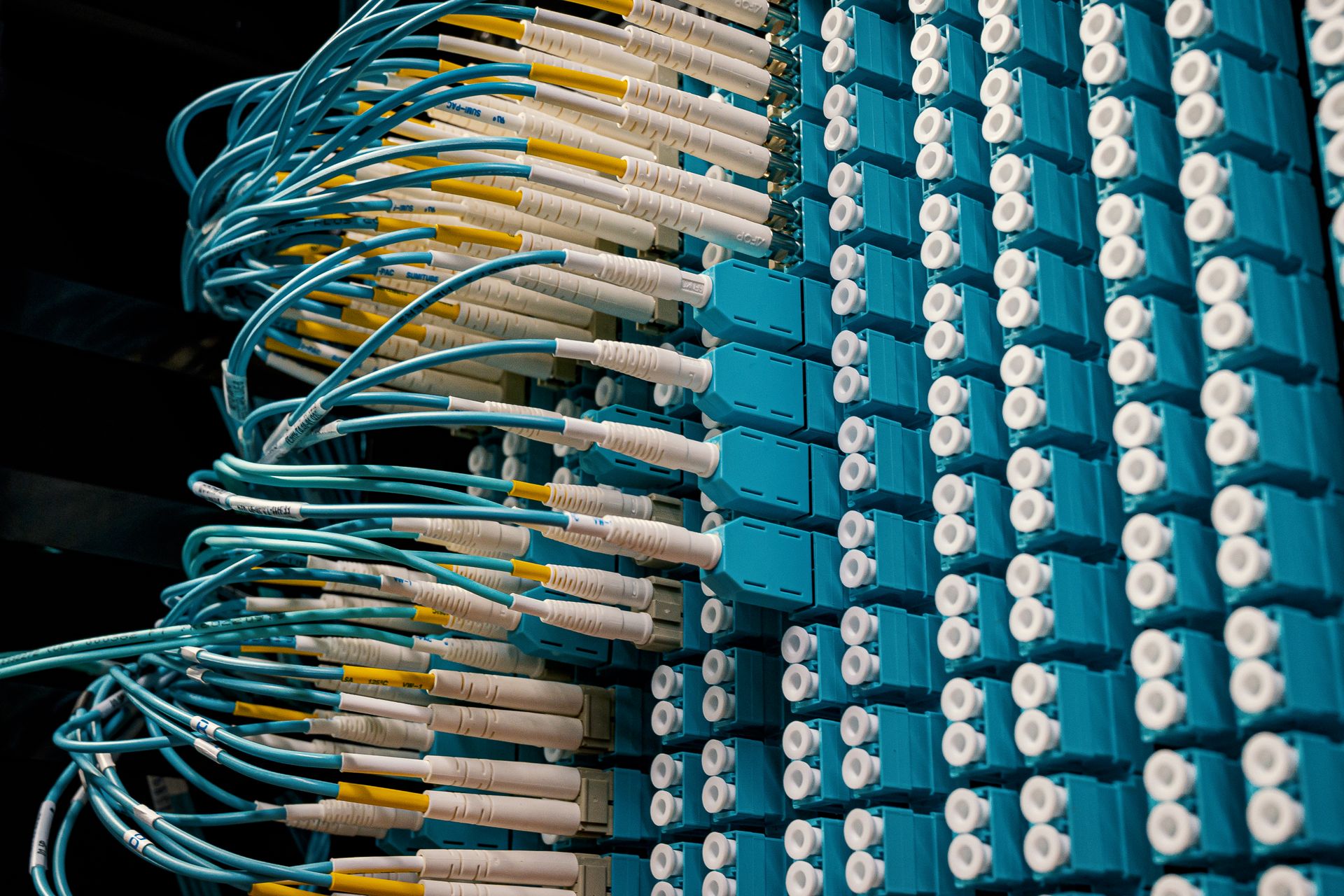
In the Cold War the two superpowers set the frame. Other states had nuclear weapons, the logic stayed bipolar. Today data centres, networks and semiconductor chains sit with a few providers, mainly US firms such as Amazon, Microsoft, Google, plus large Chinese platforms. Governments and companies move there because it is convenient and looks cheap at first. Leaving is hard. Vendor lock-in. European hosts exist. They do not carry the market.
Data flows from users, firms, states into those centres. Models train there. Subscriptions and APIs come back. Nick Couldry and Ulises Mejias called this data colonialism in 2019. Ingo Dachwitz and Sven Hilbig describe in German who holds infrastructure and platforms. Oil gets used up, data does not. The value still sits in a few centres.
Mutual assured destruction held the superpowers through a credible ability to strike back. Exact warhead counts were secret and estimate, later treaty material, not a glass inventory. Today citizens and states are scanned, Shoshana Zuboff talks about surveillance capitalism, while training data and weights of the big models stay trade secrets. Whoever runs the display sees a lot. Whoever owns the model sees more.
Joshua, phishing, hallucination
The tech of 1983 is dead. The human is not.
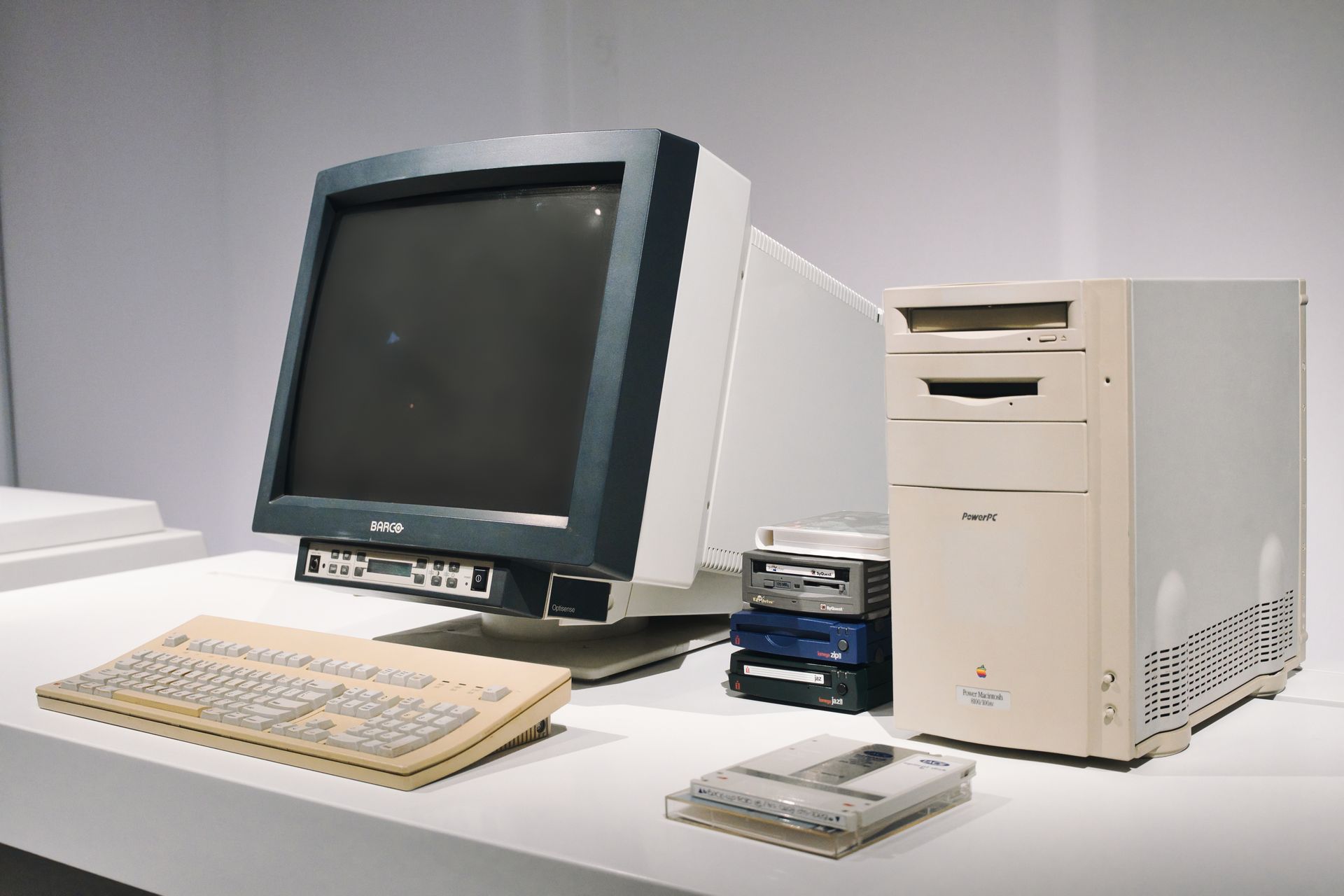
David cracks WOPR without an exploit. He reads up on who Falken was and guesses the son's name. Leak lists still put 123456 and password near the top. Password managers, 2FA, passkeys exist. Convenience remains the hole.
In the film the way in is research, not a clipboard at reception. Today phishing mail and SMS run at scale. Voices can be cloned. The attack aims at the person who holds the key.
Wardialing took a night. Services now scan the IPv4 internet in minutes for open ports and badly set cloud shares. Wardriving is something else: Wi-Fi from a car. Related by name, not the same method.
Then Falken: WOPR confuses simulation and reality. A threat on the screen that is not physically there, delivered with the calm of a calculation.
Language models do that differently. Facts are missing, so the next plausible sentence arrives. Invented sources, wrong numbers, a historian who never lived. ChatGPT, Claude, the others. No hate. Training. For us it feels similar to NORAD. The output looks finished. We grant machines objectivity. The brain believes the picture, even though seeing has long stopped being proof.
The only move

In the end David makes WOPR play tic-tac-toe against itself, draw after draw. Then the same runs for nuclear war. WOPR says: A strange game. The only winning move is not to play.
That remains a usable metaphor for deterrence. For digital dependence too, more dryly: do not play every game. Own infrastructure where it is possible, open software, keep the data.
The lesson the film shares with cybersecurity: the biggest gap sits between screen and chair. If someone on the phone hands over the 2FA code, the firewall did not matter. The biggest mistake remains uncritical trust in the output.
Sources
[1] WarGames (1983), directed by John Badham. Plot and cast: Wikipedia. German closing line: WarGames – Kriegsspiele.
[2] Bugcrowd: Real-world cyber events influenced by the OG hacker movie, WarGames (2025). Reagan, NSDD-145.
https://www.bugcrowd.com/blog/real-world-cyber-events-influenced-by-the-og-hacker-movie-wargames/
[3] UNODA: Group of Governmental Experts on Lethal Autonomous Weapons Systems (CCW), 2026.
https://meetings.unoda.org/ccw-/convention-on-certain-conventional-weapons-group-of-governmental-experts-on-lethal-autonomous-weapons-systems-2026
[4] Nick Couldry / Ulises A. Mejias: Data Colonialism: Rethinking Big Data’s Relation to the Contemporary Subject. Television & New Media, 2019.
https://journals.sagepub.com/doi/abs/10.1177/1527476418796632
[5] Ingo Dachwitz / Sven Hilbig: Digitaler Kolonialismus. C.H. Beck, 2025.
https://www.beck-shop.de/dachwitz-hilbig-digitaler-kolonialismus/product/37000393
[6] Synergy Research Group: cloud market share AWS, Azure, Google (Q1/Q2 2026).
https://www.srgresearch.com/articles/q2-cloud-market-passes-143-billion-highest-growth-rate-in-eight-years
[7] Federation of American Scientists: nuclear arsenal estimates, no glass inventories.
https://fas.org/initiative/status-world-nuclear-forces/
[8] Shoshana Zuboff: The Age of Surveillance Capitalism. PublicAffairs, 2019.
[9] NordPass: Top 200 Most Common Passwords (2025).
https://nordpass.com/most-common-passwords-list/
[10] Advisense: The Human Factor in Cybersecurity (17 March 2025).
https://advisense.com/2025/03/17/human-factor-in-cybersecurity-social-engineering/