The Teen Social Media Ban: Why Laws Are the Dumbest Firewall on Earth
Canada, Australia, Germany — social media bans for teens everywhere. Why these laws are technically brain-dead and what would actually help.

The Teen Social Media Ban: Why Laws Are the Dumbest Firewall on Earth
Sometimes I really wonder what simulation politicians are living in. The house is burning down out there — we're trying to secure production systems, keep servers running, or write clever automation — and meanwhile global and local politics are tossing out smoke bombs left and right until you get dizzy. Apparently Friedrich Merz also enjoys firing up the fog cannons, completely missing how many citizens see right through the blatant illogic of his statements. Right up there are the AfD and the Greens, completely whiffing on this topic with their ideological nonsense.
Latest highlight on my feed: Canada's freshly submitted Safe Social Media Act. They want to cut off under-16s. A blanket ban on social media. (Quick sidebar: Canada's heritage minister Marc Miller at least leaves a tiny backdoor — if you rebuild your platform and neuter the addiction algorithms, you can keep the kids. Sounds nice, but in reality it's still trying to scoop water with a fork).
Let's talk straight. As an IT pro, headlines like this give me instant high blood pressure. Why? Because these laws are so technologically hollow that any thirteen-year-old can bypass them while taking a dump on the toilet.
The 10-Second Firewall: Why Bans Crumble in Reality
Anyone who's ever managed a home network knows: you can block ports all you want. If the client wants out, it'll find a tunnel.
How does a teenager bypass this "historic" ban?
- VPN (Virtual Private Network): One click. WireGuard spins up, the exit node is in Austin or Amsterdam, and suddenly the Canadian or Australian ISP has no clue what's happening. Ban gone.
- DNS-Over-HTTPS / Alternative DNS: If the provider tries to block at the DNS level, switch to Cloudflare (
1.1.1.1). Problem solved. - Identity Fakes: As long as we're not living under Chinese-style total surveillance where you need government facial scans and real-name policies to log in (more on that later), every age verification is a joke. Back in the day, you'd white-out your student ID. Today you just click 2004 instead of 2012 on the birthdate field. If they require a camera scan? The kid holds up a photo of their older sibling or uses a cheap real-time deepfake app.
So we're not locking anyone out. We're just forcing teenagers to pick up basic shadow IT skills within five minutes. Cool side effect, I guess — but definitely not what the lawmakers intended.
Global Reality Check
Let's take a quick look at the diagram I generated for this:
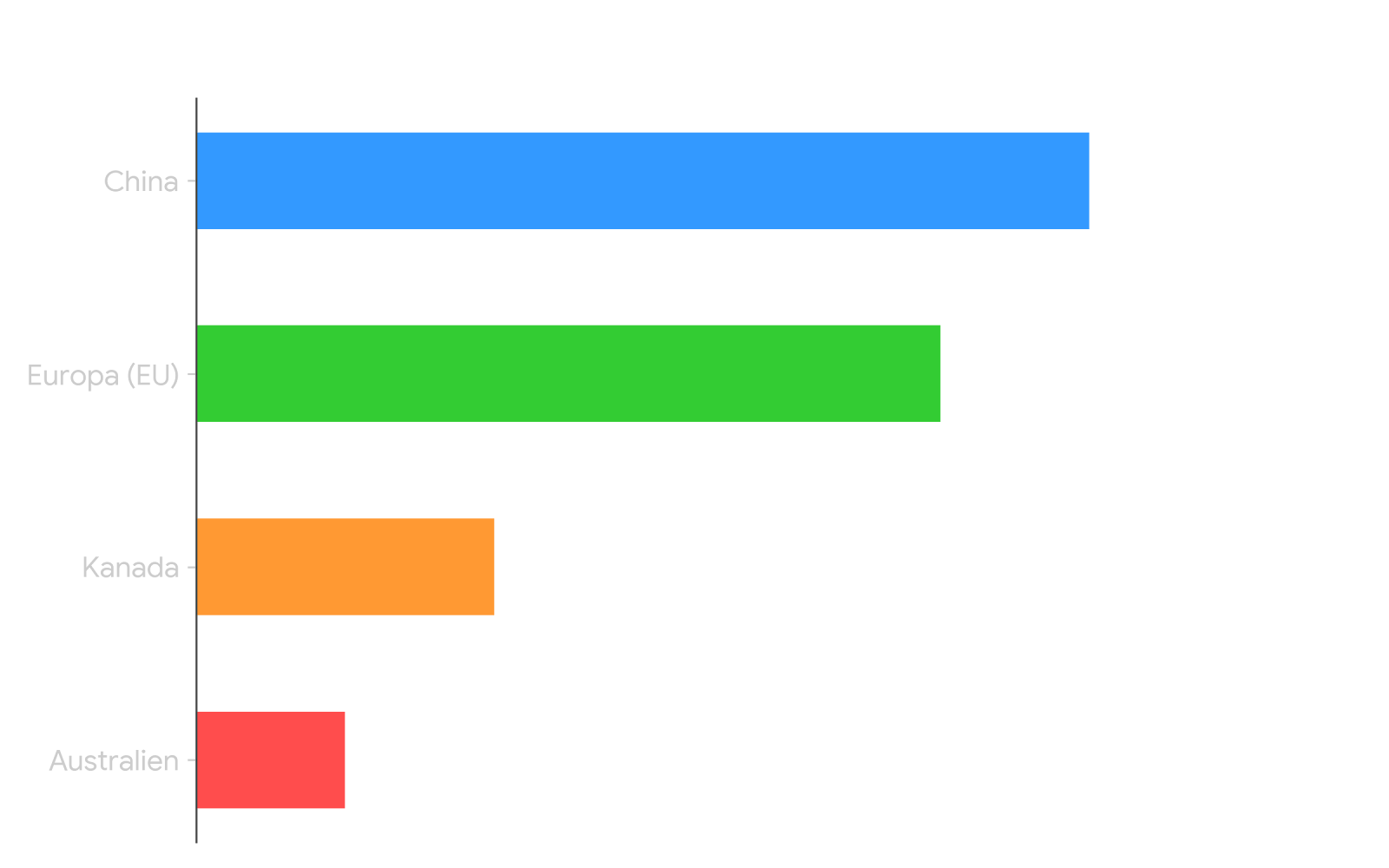
Let's look at the different architectures being rolled out worldwide:
- Australia: Passed the hard ban for under-16s. The result as of June 2026? Absolute chaos. Reports say the systems are failing completely. Kids are drawing beards on their faces to trick the AI age verification. The eSafety commissioner is hemming and hawing, realizing you can't fence in the ocean. No shit, Sherlock!
- Canada: Trying the compromise route. Ban it, but offer Big Tech a "loophole" if they rebuild the system to be youth-friendly. Won't work as long as verification is built on a house of cards.
- China: The only region where this actually "works". Why? Because there's no privacy. "Youth Mode" cracks down hard: 40-minute limit, shut off at 10 PM. But the price is total biometric surveillance of every citizen by the state. In a Western democracy? Legally and morally impossible.
- Europe (EU): The only logical approach, even if it's slow. The Digital Services Act (DSA) doesn't ban access — it forces platforms to change their architecture. No tracking for minors, no personalized addiction-driven ads, no manipulative algorithms. It tackles the problem at the root (the system) instead of fiddling around on the client (the kid).
The Blind Eye: Kidfluencers and Exploitation in Your Own Living Room
There's one thing about this whole debate that really pisses me off. Politicians act like we just need to protect kids from secretly making TikTok accounts. What about the kids who don't have a choice at all?
I'm talking about kidfluencers. Parents who drag their kids in front of the camera to cash in on family vlogs, pranks, or lifestyle bullshit.
- Who runs the account? The parents.
- Who pockets the money? The parents.
- Who sacrifices their privacy before they even know what the internet is? The kid.
Not a single Safe Social Media Act in the world helps against this form of modern digital child labor. Because on paper, the user is the 40-year-old father, while the kid is just the product in the video. Apart from France, which has passed a few timid laws about working hours and trust accounts, the rest of the world is completely asleep at the wheel.
Why German Politicians Prefer Bans Over Education
Why do German politicians jump on the ban-wagon every single time? Simple: bureaucracy and incompetence.
First: Security Theater
Churning out a ban makes for quick headlines. "We're doing something for the kids!" That it technically doesn't work? The voters won't notice until after the next election (if at all — because even generations born after 1980 are often too clueless to operate a PC properly). Digital education, on the other hand, is a generational project. It costs money, infrastructure, and doesn't deliver quick clicks at the ballot box.
Second: The Federalism Bottleneck
Digital media literacy should be a mandatory subject in schools. But nah, religion is more important — especially in Bavaria and Baden-Württemberg, where you'd better honor the local village saint! But education is a state matter. By the time all 16 German education ministers agree on whether to hold an iPad with your left or right hand in class, it'll be the year 2400, and some Franconian sausage-fetishist will still claim he knew better all along. A ban, on the other hand, you can just ram through with federal laws or the EU. The path of least resistance.
Third: The Logic-Free Cyber Bubble
When I watch Bundestag debates about IT security or network infrastructure, it hits me immediately: most decision-makers can't tell the difference between an IP address and a ZIP code. Anyone who thinks you can just "lock down" the internet with a law — like the local soccer field at 8 PM — has completely lost touch with digital reality. And we all know how you still get onto that soccer field...
The German Theater of the Absurd: From Chancellor Bans to AI Faceplants
Every party in Berlin's phrase circus is currently cobbling together their own completely unhinged position:
- Friedrich Merz (CDU): The "digital bulwark". The almost-chancellor is loudly demanding a social media ban up to age 16. His reasoning: socialization supposedly happens only through TikTok, which damages the soul. The Union wants mandatory age verification legislated. How that's supposed to work without total privacy overkill or biometric mass surveillance under GDPR? Silence in the forest. As long as the headline in Bild works.
- The Greens: Ban-lite, but make it organic. The Greens are trying to walk the tightrope. They're not calling for a total ban, but they want a legal minimum age of 14 for Instagram and co. At the same time, they strictly reject biometric verification or mandatory ID checks, claiming it endangers civil rights. See the systemic flaw? They want to introduce a ban while simultaneously outlawing the only technical means of enforcing it. That's like configuring a firewall but declaring IP blocking illegal. (Though to be fair, I agree — I'm against biometrics too if the data ends up in Palantir and other US surveillance bullshit).
- The AfD: Against it on principle. The faction reflexively shoots from the hip (even though they usually only like "thinking outside the box" when it means thinking negatively) and calls the government's ban plans "completely the wrong direction". Instead, they vaguely demand "technical solutions" for youth protection without getting specific. Media literacy and real education take a back seat when you prioritize debates about "rainbow propaganda" online over proper digital infrastructure.
The Ultimate Credibility Killer: The Mario Voigt Case
But Thuringia's governor Mario Voigt (CDU) takes the cake. The guy likes to position himself as a conservative doer, rambles on about bans and rules online, while simultaneously delivering the most embarrassing IT faceplant of the year.
The Frankfurter Allgemeine Zeitung (FAZ) just had to completely delete and block a guest article by him. Why? Because the text is heavily suspected of being nearly 100% cobbled together by generative AI. (And hey, I use AI too — but for spelling and toning down my brutal rhetoric, not to completely check out my brain!).
And it gets better: The AI in Voigt's text simply fabricated quotes from scientists that they never said! When FragDenStaat dug deeper, it turned out that even Voigt's official eulogies and memorial speeches had been carelessly run through the AI pipeline in significant parts, without any disclosure. The fact that Chemnitz University also revoked his doctorate over a solid plagiarism scandal rounds out the picture of the "scientific expert" perfectly.
The irony is so thick you could cut it with an axe: A top politician who's too incompetent in real life to set up a prompt that doesn't get caught — triggering AI detection tools like a script kiddie — wants to tell young people how to behave online. Really worked out well for him, given he supposedly understands digital education so much! If you're sneaking fake quotes into quality newspapers because you're too lazy to write yourself, you should keep a very low profile on the topic of "online dangers".
My Conclusion
Reputable institutes like the Oxford Internet Institute have been warning for years: If you completely lock out young people, you take away their chance to develop digital resilience. They become isolated, left behind, and stumble into a digital world at 16 with zero protection, never having been allowed to understand how it works.
We don't need token bans that get bypassed in 10 seconds. We need goddamn sensible system regulation for the corporations (ban dark patterns, open up algorithms, put Big Tech like Meta, Google, Apple, Amazon, Microsoft, and Deutsche Telekom on a leash) and real education in schools. Everything else is digital populism for people who still turn off their router by flipping the power strip switch.